The short answer: An operational digital twin is a living, continuously usable virtual model of a real facility, kept current with data from the building itself and used during day-to-day operations and emergencies, not just at design time. Unlike a BIM model or a static 3D scan, it stays true to the building across its lifecycle and can be queried under pressure. Capture fidelity, lifecycle currency, and queryability decide whether a twin is genuinely operational.
Most people think of a digital twin as a 3D model. That's not wrong, but it misses the point. A static 3D scan, a 2D floor plan, or even a gridded incident map is a flat artifact frozen at one moment. An operational digital twin is different: it's a living system that reflects the building as it was actually built, stays current across the building's lifecycle, and can be queried by the people who need answers under pressure. It's connected to the systems the building already runs, and it's used during day-to-day operations and emergencies rather than only at design time.
This article defines what is an operational digital twin rigorously and neutrally, explains where the term came from, and lays out the practical test for whether a twin is genuinely operational. You'll see the three distinctions buyers confuse, the architecture that makes a twin operational, and the real-world applications that separate a living model from a static map.
Where Did the Term "Operational Digital Twin" Come From?
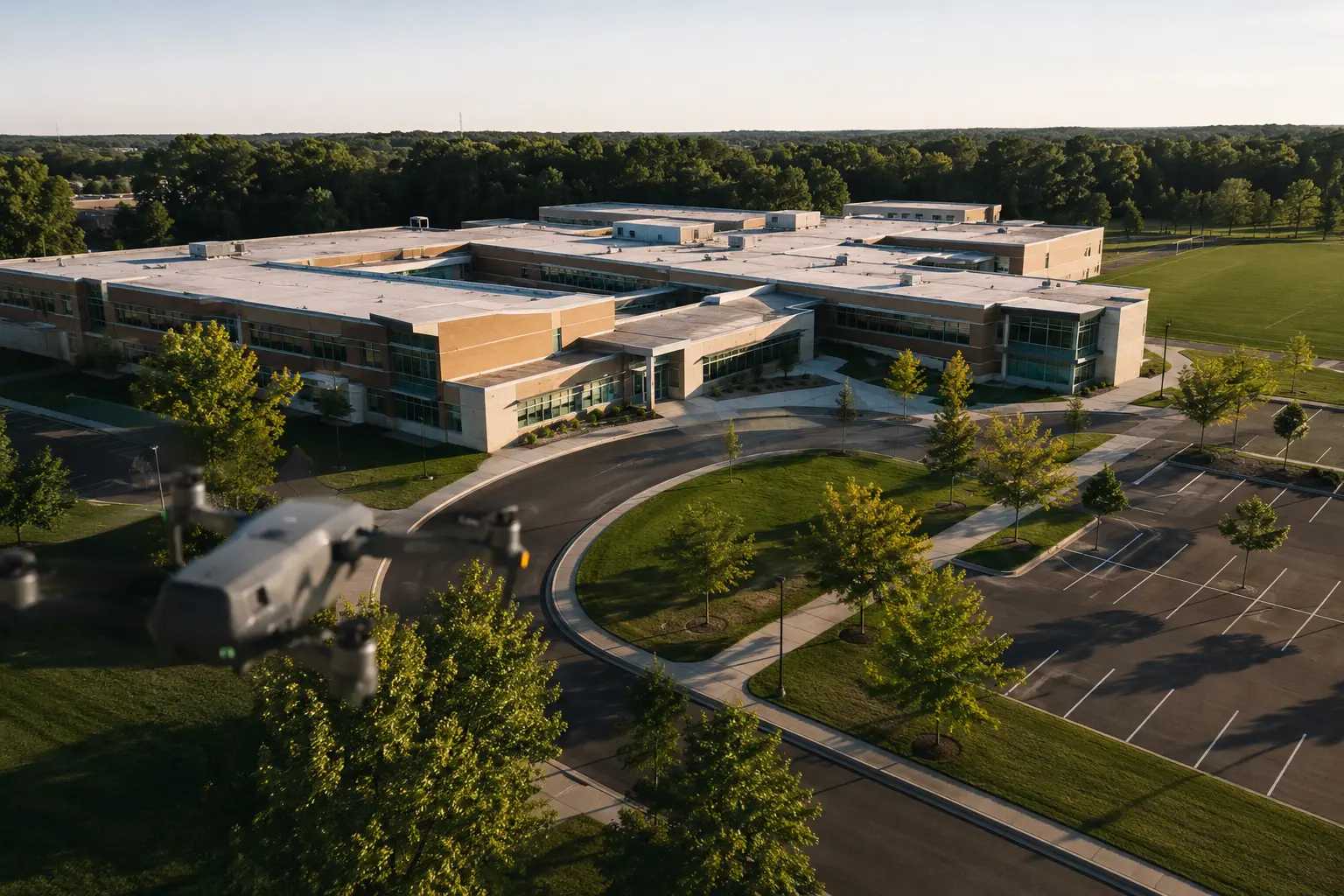
The U.S. Government Accountability Office defines an operational digital twin as a virtual model that uses live data to change along with its physical counterpart in real time, distinguishing it from a static model. The term "digital twin" was coined around 2010, though NASA engineers originally applied the concept decades earlier. What makes a twin operational is the continuous feedback loop: the digital model reflects the current state of the physical asset, and changes in the physical world update the model.
Understanding what is an operational digital twin starts with understanding what it replaced. Before digital twins, facility managers and security teams worked from as-built drawings, CAD files, or static floor plans. Those documents captured the building at one moment, usually at handover, and they aged poorly. Renovations, tenant changes, equipment moves, and system upgrades happened without updating the drawings. By the time an emergency occurred, the map on the wall was often years out of date.
The Shift from Design-Time Models to Operational Models
A BIM model is a design-time representation of what a building was meant to be. It's built during the design and construction phases, and it's valuable for coordination, clash detection, and handover. But BIM is not inherently operational. Once the building opens, the BIM model becomes a historical artifact unless someone commits to keeping it current. Most organizations don't. The model sits in a file somewhere, and the building evolves without it.
An operational digital twin ingests BIM as one capture source among several, but it doesn't stop there. It layers in lidar scans, photogrammetry, IoT sensor data, and integrated data from the systems the building already runs. The result is a model that reflects the building as it exists today, not as it was designed. That's the operational shift: from a design-time snapshot to a lifecycle-aware system.
Why "Operational" Matters in the Definition
The word "operational" signals three things. First, the twin is derived from the building as it was actually built, not just as it was planned. Second, it stays current across the building's lifecycle through continuous data feeds or periodic recapture. Third, it's queryable by the people who need answers under pressure: security teams, facility managers, and first responders. A twin that sits in a server and gets opened once a year for a capital project is not operational. A twin that a security director can query during an active incident is.
That third condition is where procurement usually goes wrong. A district can buy a beautiful model, store it correctly, train two people on it, and still have nothing useful at 10:14 on a Tuesday morning, because the one person who can open the file is off campus. Operational is not a quality rating. It is a description of who can get an answer out of the model, how fast, and on what device.
How Does an Operational Digital Twin Differ from Other Models?
Buyers confuse three things: a BIM model, a generic manufacturing digital twin, and a static 3D scan. Each has value, but none is the same as what is an operational digital twin for a facility. The distinctions matter because they determine what you can do with the model when it counts.
BIM Models Are Design-Time Artifacts
BIM models are built for coordination during construction. They're excellent for clash detection, quantity takeoffs, and handover documentation. But they're not designed to stay current. Once the building opens, the BIM model becomes a snapshot of the building at substantial completion. Renovations, tenant improvements, and equipment changes happen without updating the model. By the time a security team needs the model during an incident, it's often years out of sync with reality.
An operational digital twin can ingest BIM as a starting point, but it doesn't rely on BIM alone. It layers in as-built capture using lidar and camera technologies, enriched with proprietary point cloud processing, cloud meshes, and integrated data layers. The result is a model that reflects the building as it exists today, not as it was designed.
Manufacturing Twins Mirror Machines, Not Occupied Spaces
A generic manufacturing digital twin mirrors a machine or a process. It tracks temperature, vibration, throughput, and wear. It predicts when a component will fail and schedules maintenance before it does. That's valuable in a factory, but it's not the same as a twin of an occupied space with people moving through it.
A facility twin has to account for occupied space, spatial context, and emergency response. It answers the questions the as-built model and its data layers actually hold: which classrooms in the east wing have exterior windows, where the gas and water shutoffs sit behind the culinary lab, which doors on that corridor are on the access control system, what the third-floor mechanical room looked like at the last capture. Those are spatial intelligence questions, not machine-monitoring questions. The architecture is different, the data sources are different, and the people asking are different.
| Factor | What it is | Impact |
|---|---|---|
| Capture fidelity | Accuracy of the as-built model relative to the physical building | High |
| Lifecycle currency | How often the twin is updated to reflect changes in the building | High |
| Queryability | Whether the twin can be queried in natural language under pressure | High |
| System integration | Connection to cameras, access control, IoT sensors, and other building systems | Medium |
| Geospatial accuracy | RTK-derived latitude and longitude on the exterior twin | Medium |
What Are the Core Components of an Operational Digital Twin?
An operational digital twin is not a single technology. It's a system with four layers: capture, ontology, reasoning, and presentation. Each layer serves a different function, and all four have to work together for the twin to be genuinely operational. Understanding what is an operational digital twin means understanding how these layers interact.
Capture: Building the As-Built Model
Capture is the process of turning the physical building into a digital model. The most common methods are lidar scanning, photogrammetry, drone capture, and BIM ingestion. Lidar uses laser pulses to measure distances and build a point cloud of the space. Photogrammetry uses overlapping photographs to reconstruct 3D geometry. Drones capture exterior facades and rooftops. BIM provides the design-time baseline.
The capture layer determines the fidelity of the twin. A high-fidelity twin captures the building as it was actually built, including renovations, equipment moves, and tenant changes. A low-fidelity twin is a cleaned-up version of the design model with no as-built verification. The difference matters during an emergency, when responders need to know where the exits, stairwells, and mechanical rooms actually are.
Ontology: Structuring the Data
Ontology is the layer that turns a point cloud into a queryable model. It tags rooms, hallways, stairwells, exits, and equipment with semantic labels. It defines relationships: "This room is on the third floor," "This hallway connects to that stairwell," "This camera covers this zone." Without ontology, the twin is just a 3D mesh with no intelligence.
The ontology layer is where proprietary point cloud processing happens. It's where cloud meshes and integrated data layers get added. It's where 3D Gaussian Splats can be layered on where a site calls for them. The result is a geospatially and contextually aware model of the building and its lifecycle, not just a static scan.
What Makes a Digital Twin "Operational" Rather Than Static?
The practical test for whether a twin is operational comes down to three questions. First, is it derived from the building as it was actually built, or is it a design-time model in better clothes? Second, does it stay current across the building's lifecycle, or is it frozen at the day it was handed over? Third, can the people who need answers under pressure query it, or is it locked in a file only one consultant can open? Score every platform on your shortlist against all three, Ark included, and score on evidence rather than on a slide.
A static 3D scan, a 2D floor plan, or a gridded incident map is a flat artifact. It captures one moment, must be manually recaptured to stay true, and carries no lifecycle or context. An operational digital twin is a living system that reflects the building as it exists today, stays current through continuous data feeds or periodic recapture, and can be queried by security teams, facility managers, and first responders.
Lifecycle Currency: Staying True to the Building
Buildings change. Tenants move in and out. Equipment gets replaced. Walls get added or removed. A twin that was accurate at handover may be wildly inaccurate five years later. Lifecycle currency is the discipline of keeping the twin synchronized with the physical building.
Some organizations recapture the building annually or after major renovations. Others integrate the twin with building management systems, access control, and IoT sensors so that changes propagate automatically. The method matters less than the commitment. A twin that's out of sync with reality is worse than no twin at all, because it gives responders false confidence.
Queryability: Answering Questions Under Pressure
A twin is only operational if it can be queried when it matters. That means natural language, not CAD software and not a phone call to whoever built it. A security director should be able to ask which rooms on the north side have exterior egress windows, or where the shutoffs are in the culinary lab, or which cameras cover the loading dock, and get the answer in seconds from the model instead of in a week from a binder. The question is not whether the model looks impressive. It is whether it answers.
Queryability requires a reasoning layer on top of the ontology. It requires integration with the systems the building already runs: cameras, access control, fire alarms, and IoT sensors. It requires a presentation layer that works on a phone, a tablet, or a command center screen. Without queryability, the twin is just a 3D model that sits in a server.
Every twin is accurate the day it is handed over. Ask how yours reads in year three.
Ark captures your campus as it was actually built and keeps the twin current as the building changes, so your team and your responders are reading the same model on the worst day of the year. Schedule a Demo.
How Is an Operational Digital Twin Used in Physical Security?
Physical security is where the operational digital twin proves its value. A security team needs to know where a threat is located, where people are at risk, and where responders can enter safely. A static floor plan can't answer those questions in real time. An operational digital twin can, because it's connected to the systems that see what's happening in the building right now.
Ark Strategic is the spatial intelligence company for physical security and public safety, and the operational digital twin is its flagship expression. The fair way to read what follows is to hold Ark to the same three-part test this article just set out.
Capture fidelity. Ark builds from lidar and camera capture of the building as it stands, run through its own point cloud processing into cloud meshes and integrated data layers. Where a site earns it, and that is an engineering judgment rather than a default, 3D Gaussian Splats hold the visual detail that geometry alone loses: a crowded mechanical room, a stairwell landing, a roof access hatch. On the exterior, RTK-derived latitude and longitude ties the twin to real-world coordinates. Alphanumeric grid overlays and gridded facility maps come out of that same model, which is the artifact state school mapping statutes generally ask districts to produce.
Lifecycle currency. Ark's twin is built to be lifecycle-aware rather than delivered once and archived. Recapture after renovation, plus integration with the systems the building already runs, is the mechanism. This is the criterion that quietly decides whether the other two still mean anything in year three, and it is the one a committee should write into the contract rather than take on trust.
Queryability. The model is structured, not merely rendered, so it can be asked questions in plain language instead of opened in CAD by the one person on staff who knows how. A security director, a facilities lead, and a responding officer can each work from the same current model of the same building.
Threat Assessment and Incident Response
Many states now mandate silent panic alert systems under Alyssa's Law, and a growing number pair those laws with separate school mapping requirements. The two halves are not the same purchase. An alert says something is happening. The mapping side says what the space looks like, and that is the half an operational digital twin serves: current as-built geometry, room labels and grid squares that match the ones posted on the wall, and the doors, stairwells, and shutoffs where they actually are.
During an active incident, the useful question is not what the building was designed to be. It is what the building is now. An operational digital twin holds the current as-built model and can carry camera feeds, access control state, and sensor alerts on top of it, so a commander reading a room number is looking at that room rather than at a five-year-old drawing of it.
Integration with third-party partners such as ZeroEyes weapons detection and Verkada camera systems strengthens the twin's situational awareness. ZeroEyes publishes an alert time of 3 to 5 seconds from the moment a gun is detected to a verified alert reaching responders (ZeroEyes, 2026). That alert has to land somewhere. Ark's integration puts it on the twin, at the point it came from, so responders receive the space around the alert instead of a room number in a text message. One point of precision, stated here because most of this market will not state it: the integration is built and available, and it is not yet running as an automated feature inside customer deployments. If a provider tells you their detection-to-map handoff is live today, ask which district it is live in, and ask to call them.
Pre-Planning and Scenario Simulation
An operational digital twin supports pre-planning long before an incident occurs. Security teams can walk through the building virtually, identify vulnerabilities, and test response scenarios. They can simulate evacuations, lockdowns, and shelter-in-place procedures. They can pre-register first responders so that when an incident occurs, responders already have the map and the context.
Scenario simulation is where the twin's lifecycle currency matters most. If the twin is out of date, the simulation is based on a building that no longer exists. If the twin is current, the simulation reflects the building as it is today, and the lessons learned are actionable.
What Are the Limitations and Implementation Challenges?
This is the section that separates operators from slide decks. A twin is a system with a budget line, a named owner, and a maintenance schedule, and the questions below are the ones a committee should put in writing before it signs anything. Every honest answer narrows the field.
What an Operational Digital Twin Does Not Provide
Ask where the coordinates stop. Real-world latitude and longitude for every room, hallway intersection, and stairwell is not a standard capability of an operational twin, Ark's included. The exterior twin carries RTK-derived coordinates; interior real-world coordinate alignment is a separate processing step that is not performed on every model today. If your state statute reaches the interior, ask for that alignment in scope and in writing, and treat an unqualified yes as a no.
Ask what the software computes, not what it displays. Routing that accounts for locked doors, one-way corridors, and vertical travel is a category capability rather than something every twin delivers, and turn-by-turn indoor navigation on a responder's handset is roadmap across this market rather than a shipped feature. Ask the same of the plumbing behind it: GIS integration is available per need rather than as a current standard, pushing map data into a 911 dispatch or Computer-Aided Dispatch system through GeoJSON, KML, or an API is designed for on several platforms but not live in most customer deployments, and CAD drawings via Revit or BIM are an add-on service rather than part of the base layer. A vendor who answers yes to all of that without a single caveat is reading you a roadmap and calling it a product.
Governance, Ownership, and Data Quality
The hardest problem is not simulation. It's synchronization between the physical building and the digital model over time. Someone has to own model updates, data quality, latency targets, and exception handling. That's a governance problem, not a technology problem.
How Do You Choose the Right Operational Digital Twin Platform?
Choosing an operational digital twin platform starts with understanding your use case. Are you building the twin for emergency response, facility management, capital planning, or all three? The answer determines which capabilities matter and which are nice to have.
Evaluating Capture Methods and Fidelity
Not all capture methods deliver the same fidelity. Lidar scanning provides high accuracy but requires physical access to every space. Photogrammetry is faster but less precise. Drone capture works well for exteriors but can't see inside. BIM ingestion is efficient but only as accurate as the design model.
The right capture method depends on the building type, the use case, and the budget. A hospital with complex mechanical systems may need lidar. A warehouse with open floor plans may be fine with photogrammetry. A campus with multiple buildings may need a mix of methods. The key is to match the capture method to the fidelity requirement.
Integration with Existing Systems
An operational digital twin is only as useful as the systems it connects to. If the twin can't pull data from your cameras, access control, fire alarms, and IoT sensors, it's not operational. It's just a 3D model. Integration is where most implementations succeed or fail.
Ask whether the platform integrates with the systems you already run. Ask whether the integration is real-time or batch. Ask whether the integration requires custom development or whether it's a standard connector. Ask whether the platform can push data to your 911 dispatch system or whether that's a roadmap item. The answers will tell you whether the twin will work in your environment.
The Bottom Line
An operational digital twin is a living, continuously usable virtual model of a real facility, kept current with data from the building itself and used during day-to-day operations and emergencies. It's not a static 3D scan, a design-time BIM model, or a generic manufacturing twin. It's a system with four layers: capture, ontology, reasoning, and presentation. The practical test for whether a twin is operational comes down to three questions: Is it derived from the building as it was actually built? Does it stay current across the building's lifecycle? Can the people who need answers under pressure query it?
Take those three questions into every demo you sit through this year, Ark's included. Ask to see the as-built capture next to the design drawings and look at where they disagree. Ask who updates the model after the summer renovation, by name, and ask what happens if that person leaves. Then ask someone who has never opened the software to put a question to it while you watch. The organizations that get value out of a twin are the ones that treated it as an operational system with an owner, not as a deliverable that arrived once and went quiet.
Frequently Asked Questions
What is an operational digital twin and how does it differ from a regular digital twin?
An operational digital twin is a living model that stays current with data from the physical building and supports day-to-day operations and emergencies. A regular digital twin may be a static snapshot built at design time and never updated. The operational twin is queryable, integrated with building systems, and used under pressure.
Can I build an operational digital twin in-house or do I need a vendor?
Building a twin in-house requires lidar or photogrammetry equipment, point cloud processing expertise, ontology development, and integration with building systems. Most organizations partner with a vendor for capture and processing, then maintain the twin internally. The decision depends on your team's technical capability and the complexity of your facility.
How often does an operational digital twin need to be updated?
Update frequency depends on how fast your building changes. High-turnover facilities like hospitals or multi-tenant offices may need annual recapture. Stable facilities like warehouses may only need updates after major renovations. Continuous updates via IoT sensors and building systems keep the twin current between recapture cycles.
What does it take to keep an operational digital twin accurate over time?
Keeping a twin accurate requires governance, ownership, and data discipline. Someone must own model updates, verify data quality, and manage integration with building systems. Without that ownership, the twin drifts out of sync with the physical building and loses its operational value. Budget for ongoing maintenance, not just initial capture.
How do I measure ROI from an operational digital twin?
ROI comes from faster incident response, reduced downtime during emergencies, better capital planning, and improved facility management. Track metrics like response time, evacuation efficiency, maintenance cost, and capital project accuracy. The twin pays for itself when it prevents one major incident or saves one capital project from costly rework.