The short answer: Threat assessment is a structured process for identifying people who may be moving toward targeted violence and intervening before an attack occurs. A multidisciplinary team weighs concerning behaviors, grievances, capacity and stated intent, then coordinates support or protective action. It works because targeted violence is a process that shows warning signs, not an event that arrives without one.
Threat assessment has become a cornerstone of violence prevention in schools, workplaces, and public spaces. Unlike reactive security measures that respond after an incident, threat assessment supports prevention by identifying warning signs and intervening early.
The approach originated with the U.S. Secret Service's research into targeted violence. Their findings showed that attackers rarely strike without warning. Most communicate intent, display concerning behaviors, or experience identifiable grievances before acting.
Today's threat assessment programs operate across sectors. Schools use behavioral threat assessment teams to address student safety. Corporations deploy workplace violence prevention teams. Healthcare facilities manage threats from patients and visitors.
The stakes are high. In the 2021-22 school year, 65% of all U.S. public schools reported having a threat assessment team (NCES, 2024). As of April 2024, that figure had climbed to 85%, up from 82% in 2022-23 (IES, 2024). The growth reflects mounting recognition that prevention requires systematic evaluation, not guesswork.
This article walks through the threat assessment process, team structure, implementation challenges, and sector-specific applications. You'll see how organizations build programs that support preparedness without overreacting to every concern.
What Makes Threat Assessment Different from Risk Assessment?
Threat assessment and risk assessment serve different purposes in security planning. Understanding the distinction helps organizations deploy the right tool at the right time.
| Threat assessment | Risk assessment | |
|---|---|---|
| Unit of analysis | A specific person | The organization and its site |
| Question it answers | Is this individual on a pathway to violence, and how do we intervene? | Where are we vulnerable, and what controls reduce our exposure? |
| What it examines | Behaviors, communications, grievances, means and intent | Access control, surveillance coverage, emergency communications |
| Output | A managed case and an intervention plan | A prioritized list of vulnerabilities and mitigations |
| Cadence | Case by case, as concerns surface | Periodically, as a systems review |
Threat Assessment Targets Individuals and Behaviors
Threat assessment evaluates specific people who may pose a risk of targeted violence. The process examines behaviors, communications, and circumstances that suggest someone is moving toward an attack.
The focus is behavioral. Teams look for warning signs: research into targets, acquisition of weapons, rehearsal of attacks, or communication of intent. They gather information from multiple sources and assess whether the person has the motivation, means, and intent to act.
This approach differs fundamentally from broad security planning. Threat assessment asks: "Is this individual on a pathway to violence, and how do we intervene?"
Risk Assessment Evaluates Vulnerabilities and Likelihood
Risk assessment examines organizational vulnerabilities and the likelihood of various threats materializing. It's a systems-level analysis that identifies gaps in security controls, physical infrastructure, or emergency procedures.
A risk assessment might evaluate: inadequate access control, lack of surveillance coverage, or insufficient emergency communication systems. The output is a prioritized list of vulnerabilities and recommended mitigations.
Risk assessment asks: "Where are we vulnerable, and what controls reduce our exposure?" It's about hardening the environment, not managing individual cases.
Effective security programs use both. Risk assessment shapes infrastructure and policy. Threat assessment manages concerning individuals before they act.
How Does the Threat Assessment Process Work?
Threat assessment follows a structured sequence. Each phase builds on the last, moving from identification through intervention and monitoring.
Phase One: Identification and Reporting
The process begins when someone reports concerning behavior. That report might come from a teacher, coworker, family member, or the individual themselves.
Effective programs create multiple reporting pathways. Anonymous tip lines, online forms, and direct contact with team members all lower barriers to reporting. The goal is to capture information early, when intervention is most effective.
Not every report triggers a full assessment. Teams triage incoming information to separate low-level concerns from cases requiring deeper evaluation. A student's offhand comment differs from a detailed plan with specific targets.
Organizations that establish clear reporting protocols see higher participation rates. When people understand what behaviors warrant attention and how to report safely, they're more likely to come forward with concerns.
Phase Two: Information Gathering and Assessment
Once a case warrants full assessment, the team gathers information from multiple sources. They interview the subject, review communications, consult with people who know the individual, and examine relevant records.
The team evaluates several factors: Does the person have a grievance or perceived injustice? Have they researched targets or methods? Do they have access to weapons? Have they communicated intent, even indirectly?
This phase requires careful documentation. Teams record sources, observations, and reasoning. That documentation supports decision-making and creates a record if the case escalates.
The assessment produces a judgment about risk level and recommended actions. High-risk cases demand immediate intervention. Lower-risk cases may require monitoring or supportive services.
Phase Three: Intervention and Management
Intervention strategies vary based on risk level and individual circumstances. High-risk cases may require law enforcement involvement, emergency mental health services, or immediate protective measures for potential targets.
Moderate-risk cases often benefit from supportive interventions. Connecting someone to counseling, conflict resolution, or employee assistance programs can address underlying grievances before they escalate.
Low-risk cases typically involve monitoring and periodic check-ins. The team stays alert to changes in behavior or circumstances that might elevate risk.
Intervention isn't punishment. The goal is to redirect someone away from violence, not to penalize them for concerning behavior. That distinction matters for program credibility and effectiveness.
What Makes a Threat Assessment Team Effective?
Team composition determines program effectiveness. The right mix of expertise ensures thorough evaluation and appropriate intervention.
Core Team Roles and Responsibilities
A functional threat assessment team includes representatives from security, human resources or student services, mental health, and legal or compliance. Each brings a distinct perspective.
Security professionals understand physical vulnerabilities and protective measures. HR or student services staff know personnel policies, disciplinary procedures, and support resources. Mental health clinicians assess psychological factors and recommend interventions. Legal advisors ensure the process respects privacy, employment law, and civil rights.
In schools, teams typically include an administrator, school counselor, school resource officer, and school psychologist. Larger districts may add a threat assessment coordinator who manages cases across multiple sites.
In workplaces, teams often include a security director, HR manager, employee assistance program representative, and legal counsel. Healthcare settings add clinical risk managers and patient safety officers.
The multidisciplinary structure prevents blind spots. A security professional might miss mental health nuances. A counselor might not recognize tactical warning signs. Together, they see the complete picture.
Training and Ongoing Development
Team members need specialized training. Understanding the behavioral pathway to violence, recognizing warning signs, and conducting structured assessments all require skill development.
Training should cover:
- The research base for threat assessment
- Legal and ethical considerations
- Interview techniques
- Risk evaluation frameworks
- Intervention strategies
Teams benefit from case-based learning and tabletop exercises.
Ongoing development matters. Teams should meet regularly to review cases, discuss emerging threats, and refine procedures. Annual refresher training keeps skills sharp and incorporates new research.
External consultation adds value. Bringing in subject matter experts for complex cases or program reviews helps teams avoid blind spots and stay current with best practices.
What Does Threat Assessment Look Like in K-12 Schools?
Schools face unique challenges in implementing threat assessment. Balancing student safety with developmental needs and privacy rights requires careful calibration.
School-Specific Warning Signs and Triggers
School-based threat assessment focuses on behaviors that suggest a student may be moving toward violence. Common warning signs include: fixation on violence or weapons, research into past school attacks, threatening communications, and social isolation combined with grievances.
Context matters. A high school student's dark creative writing may warrant conversation but not alarm. The same student researching bomb-making while expressing hatred toward classmates demands immediate assessment.
Teams distinguish between transient threats (impulsive statements made in anger) and substantive threats (statements reflecting planning and intent). The former may require counseling and conflict resolution. The latter trigger full assessment protocols.
Developmental stage shapes interpretation. Elementary students rarely plan targeted violence. Concerning behaviors at that age often reflect family stress, trauma, or developmental challenges requiring support rather than threat management.
The U.S. Secret Service National Threat Assessment Center's analysis of 67 averted school attack plots between 2006 and 2018 found that bystander reporting of concerning behavior is what prevented them (NTAC, 2021). That finding underscores the importance of creating reporting cultures where students feel safe coming forward.
Integrating Assessment with Student Support Systems
Effective school threat assessment programs connect to broader student support infrastructure. Teams coordinate with multi-tiered systems of support, school climate initiatives, and mental health services.
Many students identified through threat assessment need supportive intervention, not punishment. A student expressing suicidal ideation along with homicidal thoughts requires mental health services, not just disciplinary action.
Schools must work through privacy laws. FERPA protects student records, but it includes exceptions for health and safety emergencies. Teams document why information sharing is necessary and limit disclosure to what's required for safety.
Parent communication presents challenges. Schools must inform parents about concerns while maintaining the assessment's integrity. Some parents cooperate fully. Others deny problems or resist intervention, complicating the team's work.
Rural schools face particular obstacles. Of the schools that reported having a threat assessment team, rural schools were the least likely to be among them (NCES, 2024). Limited mental health resources, smaller staff, and geographic isolation make program implementation harder in rural districts.
See your building the way a first responder needs to.
Ark builds an operational digital twin of your facility from a single capture, so your team and responders can prepare, route, and defend every decision. Schedule a Demo.
How Does Threat Assessment Work in the Workplace?
Workplace threat assessment addresses violence risks from employees, former employees, customers, and domestic partners. Each category requires different approaches.
Employee and Insider Threat Cases
Employee-related cases often involve grievances about discipline, termination, or perceived unfair treatment. Warning signs include: escalating conflicts with supervisors or coworkers, concerning communications, policy violations, and statements about violence or revenge.
Termination situations require special attention. The team should assess risk before separation, coordinate security measures during the exit process, and monitor for post-termination escalation. High-risk terminations may warrant law enforcement notification and temporary protective measures.
Insider threat cases blend workplace violence concerns with potential sabotage or data theft. An employee who feels wronged may pose both physical and operational risks. Assessment must consider both dimensions.
Documentation becomes critical in employment contexts. Teams must balance thorough record-keeping with employment law requirements. Every assessment step should be documented with clear behavioral observations, not subjective judgments or assumptions.
Healthcare and Public-Facing Settings
Healthcare facilities face elevated violence risk. Patients experiencing psychiatric crises, substance withdrawal, or dementia may become aggressive. Family members stressed by medical emergencies sometimes direct anger at staff.
Healthcare threat assessment teams evaluate: patient history of violence, current mental status, substance use, access to weapons, and specific threats against staff. They coordinate with clinical teams to integrate safety planning with patient care.
Public-facing workplaces (retail, government services, utilities) must assess threats from customers and the general public. These cases often lack the relationship history available in employee cases, making assessment more challenging.
Teams rely on: reported statements or behaviors, social media activity, prior contacts with the organization, and law enforcement records. They implement protective measures while the assessment proceeds, erring on the side of staff safety.
What Derails a Threat Assessment Program?
Organizations building threat assessment programs encounter predictable obstacles. Anticipating these challenges and planning responses improves outcomes.
Overcoming Reporting Barriers and Stigma
People hesitate to report concerning behavior for many reasons. They fear overreacting, don't want to get someone in trouble, worry about retaliation, or assume someone else will report.
Reducing barriers requires:
- Clear communication about what to report
- Multiple confidential reporting channels
- Protection against retaliation
- Feedback showing that reports lead to appropriate action, without violating privacy
Stigma around mental health complicates reporting. People worry that reporting a colleague's depression or anxiety will harm their career. Programs must emphasize that threat assessment is about behavior and risk, not mental health diagnosis.
Training the broader community helps. When teachers, employees, or students understand threat assessment's purpose and process, they're more likely to report concerns appropriately.
Anonymous reporting systems can increase participation, but they create challenges for follow-up and information gathering. Programs should offer both anonymous and identified reporting options, explaining the trade-offs of each.
Balancing Privacy, Civil Rights, and Safety
Threat assessment involves gathering sensitive information about individuals. Programs must respect privacy and civil rights while fulfilling safety obligations.
Legal frameworks vary by sector. Schools operate under FERPA and IDEA. Workplaces must handle employment law, ADA, and state privacy statutes. Healthcare adds HIPAA considerations.
Best practices include: limiting information gathering to what's necessary for assessment, restricting access to assessment records, documenting the basis for privacy exceptions, and consulting legal counsel on complex cases.
Teams should avoid profiling based on protected characteristics. Threat assessment evaluates behavior and circumstances, not race, religion, disability, or other protected status. Documentation should reflect behavioral observations, not assumptions.
Resource Constraints and Competing Priorities
Threat assessment requires dedicated time and expertise. Organizations struggle to allocate resources when budgets are tight and staff are stretched.
Smaller organizations can start with basic protocols and part-time team participation. A simple policy, clear reporting mechanism, and quarterly team meetings establish a foundation. Programs can mature as resources allow.
Leveraging existing structures helps. Many organizations already have safety committees, student support teams, or HR case management processes. Building threat assessment into those structures reduces the resource burden.
External partnerships extend capability. Schools can partner with local mental health agencies. Workplaces can contract with employee assistance programs or security consultants. These relationships provide expertise without full-time staffing costs.
How Do You Measure Whether the Program Is Working?
Threat assessment programs require ongoing evaluation. Measuring effectiveness helps organizations refine processes and demonstrate value.
Key Performance Indicators and Metrics
Programs should track: number of reports received, percentage requiring full assessment, time from report to initial response, intervention types deployed, and case outcomes. These metrics reveal program utilization and operational efficiency.
Outcome measurement is challenging. Success often means nothing happened, an attack was prevented. That's difficult to prove definitively. Programs can track: cases successfully de-escalated, individuals connected to support services, and absence of violence from assessed individuals.
Process metrics matter too. Are reports being triaged within 24 hours? Do high-risk cases receive immediate attention? Is the team meeting regularly? These operational indicators predict program health.
Gathering feedback from team members, reporting sources, and organizational leadership provides qualitative perspective on program strengths and gaps. Annual surveys or structured interviews capture this information systematically.
Adapting to Emerging Threats and Research
The threat environment evolves. Social media creates new pathways for grievance amplification and attack planning. Ideological movements inspire new forms of targeted violence. Research reveals better assessment methods.
Programs should review and update procedures annually. That review should incorporate: new research on warning behaviors, lessons from recent incidents, changes in legal requirements, and feedback from program stakeholders.
External benchmarking helps. Comparing your program to recognized standards and peer organizations identifies improvement opportunities. Professional associations and government agencies publish guidelines that support continuous improvement.
Case reviews build institutional knowledge. After completing cases, teams should conduct structured reviews examining: what worked, what could improve, and what the case teaches about future assessments. That learning feeds back into training and procedures.
How Does Ark Make the Assessment Itself Faster and More Accurate?
Everything above is the behavioral half of threat assessment: the reports, the interviews, the team meeting, the management plan. That work stays with the team, and no model of a building will tell you whether a grievance is hardening into a plan.
The other half is the building itself, and most programs assess it far less often than they assess people. The reason is mundane. A physical assessment means walking the site with a clipboard, so it happens once, and then the findings age. An operational digital twin removes that constraint, and it changes the assessment itself rather than just what you do with the results.
Assess the whole site without walking it
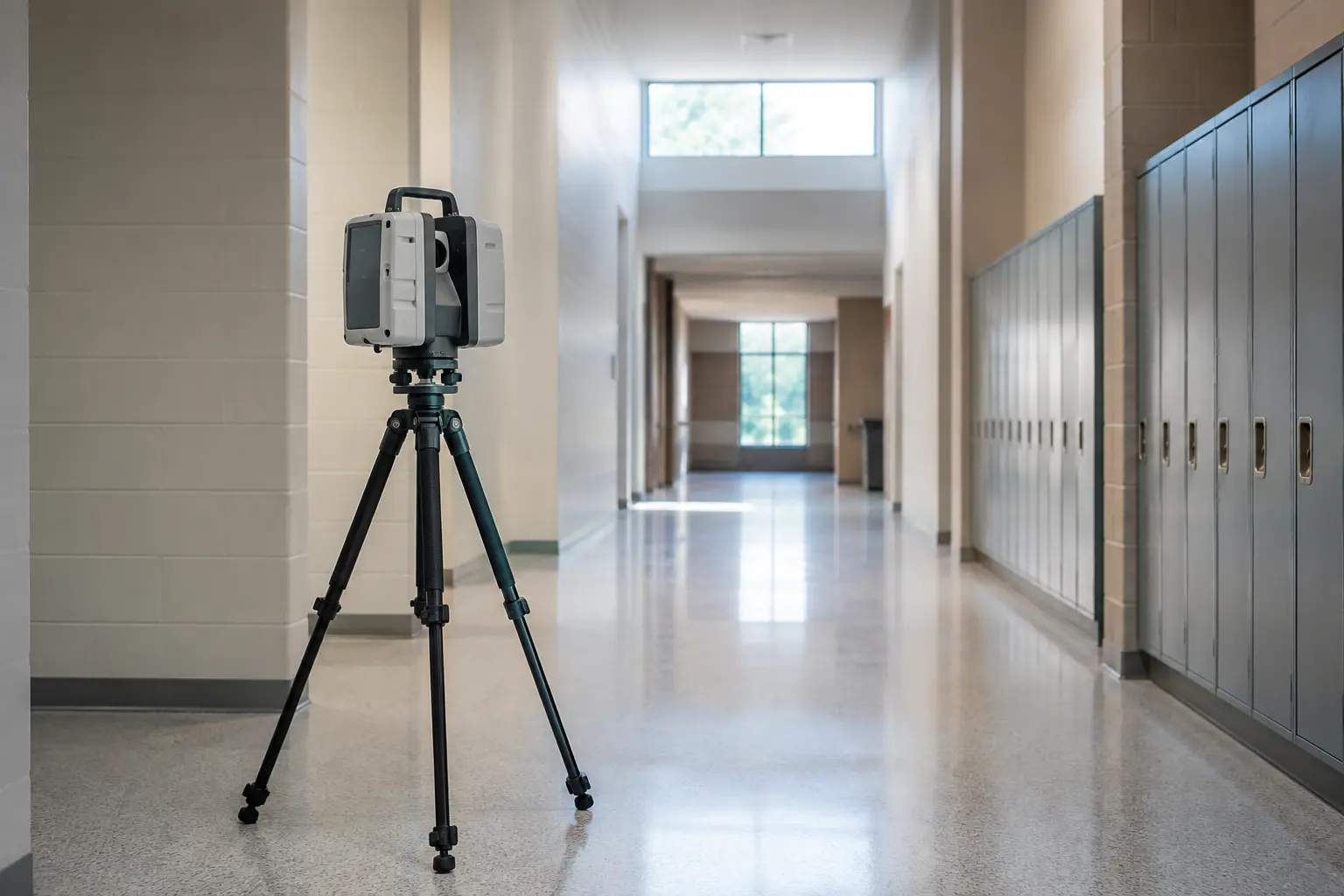
Ark captures the facility once, from drone, LiDAR, or spatial data the organization already owns, and processes it into a navigable twin accurate to the millimeter. From that point the assessment happens in the viewer, from any device.
A team can move through every corridor, stairwell, entry point and sightline, and question the model in plain English instead of hunting through drawings. The great majority of a site assessment can be done this way, by people who are not all in the same state, without scheduling a walkthrough at all.
See what your cameras actually cover
Camera coverage is the finding assessments most often get wrong, because an inventory is not a coverage map. Knowing there are 140 cameras tells you nothing about which spaces are watched.
Ark Sentinel pins every camera, sensor, alarm and access point to its position in the twin, and the Camera Health Portal reports uptime, signal quality and field-of-view coverage gaps device by device. The blind spot stops being something an assessor has to notice and becomes something the model shows you.
Work from the live building, not last year's snapshot
Sentinel brings the live feeds into that same view, alongside IoT devices, access control and live person tracking. This is the difference between an operational twin and a live one: the twin stops being a record of the building and becomes the operating picture of it.
In practice that means an assessment finding and the live camera covering it sit in the same place, so a finding does not have to wait for the next review cycle to be acted on. It is also the model responders need on the day, which is the problem critical incident mapping exists to solve.
Test the mitigation before you rely on it
An assessment that ends in recommendations is only half finished. Ark Scenario runs emergency simulations inside the organization's own capture: active-threat response against real entry and exit points, evacuation flow against real geometry, responder staging, choke-point analysis.
A proposed change can be rehearsed against the actual building before it is funded, and the annual tabletop becomes a spatially grounded drill rather than a conversation around a table.
Repeat it next year and see what moved
Because the twin is a living model rather than a one-off deliverable, the site can be re-captured at any interval and the captures compared side by side.
An annual reassessment stops being a repeat of the same manual effort and becomes a comparison: what changed, what got built out, which mitigations were actually implemented, where coverage drifted. That is the part manual assessments almost never deliver, because nobody wants to walk the whole building again to find out.
None of this assesses a person. The behavioral work stays with the team. What changes is that the physical half of the program becomes something a team can do thoroughly, repeat on a schedule, and act on the same day.
The Bottom Line
Threat assessment supports violence prevention by identifying concerning individuals and intervening before attacks occur. The process relies on structured evaluation, multidisciplinary teams, and coordinated intervention rather than reactive security measures.
Effective programs share common elements: clear policies, trained teams, accessible reporting mechanisms, and integration with broader safety and support systems. They balance safety imperatives with respect for privacy and civil rights.
Implementation requires sustained commitment. Organizations must invest in training, dedicate staff time, and support teams with appropriate resources and authority. The payoff is a systematic approach to managing one of the most challenging aspects of organizational safety.
Frequently Asked Questions
What's the difference between a threat and a risk in threat assessment?
A threat refers to a specific individual who may pose danger based on behaviors, communications, or circumstances. Risk describes the likelihood and potential impact of various harmful events. Threat assessment evaluates people; risk assessment evaluates vulnerabilities and probabilities across the organization.
How long does a typical threat assessment case take?
Initial triage happens within 24 hours of a report. Full assessments typically take 3-10 days depending on complexity and information availability. High-risk cases trigger immediate protective measures while assessment continues. Lower-risk cases may involve extended monitoring over weeks or months.
Can we build threat assessment capability in-house or do we need external consultants?
Most organizations can build internal capability through training and policy development. External consultants add value for program design, complex cases, and periodic reviews. The key is ensuring your team has the right mix of expertise, training, and organizational support to function effectively.
What legal protections exist for people who report concerns?
Most jurisdictions protect good-faith reporting through whistleblower statutes, anti-retaliation policies, or specific threat assessment laws. Organizations should explicitly prohibit retaliation in policy and communicate those protections. Confidentiality protections vary by sector and should be clearly defined in program procedures.
How do we measure whether our threat assessment program is working?
Track operational metrics like reports received, response times, and intervention types. Monitor outcome indicators including successful de-escalations and connections to support services. Gather stakeholder feedback through surveys and case reviews. The absence of violence from assessed individuals, while difficult to attribute definitively, suggests program effectiveness.